Friday, August 19, 2011

Vermouth In Veritas

Cocchi Vermouth
I’m the last one who tries to dredge-up old curiosities. Some things, I agree, do not need anymore banal representation; or more importantly, any bit of hypertensive nostalgia that currently, our abecedarian youth is rendering into their own representative logo. Strange...because I can’t help but see future classes of pre-grads allowing posthumous pop-imagery to guide them in keeping the future world turning on-axis. I’m being too harsh, because I’m just as guilty for digging-up remembrances of past times, but the prime difference between me and those who are somewhat younger, is that I lend a little bit more exposure to the treasures of my childhood rather than someone else’s. Sure, I had an affinity for those old poster reprints you can still buy during the first week of a freshman college semester, but I know the “Le Chat Noir” and Salvador Dali are long dead; they leave, if anything, a more fatuous legacy now. In more important retrospects, do you remember the old Noilly Prat posters and the hat-conscious lady who smiles with a bourgeois grin for Martini & Rossi? Of course, because she has just as easily become a piece of sustainable Americana. Though the ads were foreign-born, we’ve understood the tangible enjoyments in these type of things; whether it’s communicative art, thirst, or both, these entities have become partially obscured. However, a deeper, much more delicious interest awakens. 
What if I said there’s an actual “Indication,” or “Denomination” of origin for Vermouth? Would you believe me? Faithless or not, you now have a sensible means of enjoying one thing that could dispel some age-old uncertainties. It’s not white, dry, or red exactly, but is accurately on the sweet side. “Cocchi” is not the style, but rather, the name of the producer whose resurrection of the drink, is based somewhere within a long-due anniversary; with recipes dating to 1891, questions as to why it has not outdone some obvious competitors, is mysterious enough for anybody. Amber in color, it delivers on some particularly unexpected nuances. Tobacco, chocolate, savory orange and bitter undertones regulate an otherwise sweet profile usually suggested in the Moscato grapes that temper its overall sultriness. Moreover, the varietal is from Asti, which is something unsurprising, considering the lure of Piedmont’s most notable “frizzante” sparkler. Would I call it a dessert wine ? No, please do not think of it as a “dessertif” either. Still, I might give off a certain air of pretension for saying it, but, above all, I, and the people who live in Torino Italy, would be furious if it was viewed as something of an after-dinner plaything. Practically speaking, it has a slight “Amaro” style finish, but the unholy labeling of it as a “digestivo” could be equally baffling. Credit to those who enjoy it on their own terms, regardless of naming.  
Aperol Bitters
The Cocchi brand mainly dwells in a golden-colored Apertivo that arrived in the U.S. as of late, but as “Americano” is significantly more quenching than anticipated, we can see where this is all going. The recent arrival of “Aperol” and other overseas breakthroughs, are crashing though North America’s ice cube barrier; ideally, some interesting stuff is being poured into the tube glasses of younger, but mostly unsuspecting contemporaries. To become obsessed by spritzy, liquor-driven concoctions of Prosecco and much sweeter tidbits, is nothing recent, but I would bank on the success of the resurgent Vermouth.                 
One relief, more or less, is knowing that our next of kin may actually see the appeal in the ancestral mention of “Manhattans” and someone aptly called, “Rob Roy.” I have good feelings about the future of re-occurring drinkables, but the driving force behind them, are nothing but fashionable ideas in the poorest of virtues. I’ve been eagerly informed that sweets, or bitters still do not account for the most popular agents used to make a cocktail. These days, the mischievous aspects of my ‘palate-to-brain’ function of thought, have me wondering what the problem would be in using something lawfully designated, but still twisting beyond some realm of time-honored craftsmanship and popularity.  
Let’s make a compulsory gesture to the good future of Vermouth.     
Brian Maniotis
Westchester Wine Warehouse Team
Visit us online @: westchesterwine.com

Friday, August 12, 2011

The College Try.


Secateurs Red
The doldrums of inexpensive juice is something that generates a bit of personal remorse for many people. For whatever’s sake, a much more thrifty purchase generally means that you would be better off going to your local beer monger to have your growlers refilled. That’s the the most interesting predicament though, don’t you think ? Somehow, I believe it would not be advisable to detract from my father’s advice and buy wine when all one person has, is that “beer pocket” of which he always so passionately inferred. Now, believe it or not, I was once a college student, and I did not have any particular taste in beer or liquor; something else, that is equally unbelievable. However, what I did have, was a summer job that somehow paid for many indulgent weekends. Red or white, it didn’t matter. If the price was right, I could expect to be overcome with cross-sections of proper nuance and lukewarm haziness at best. Which is not to say there is really any room for comparison to my former peers, especially when they were caught bogarting cases of “Schlitz” every so often. I question the appeal of twenty-four helpings of any canned product, but something seems overly self-gratifying in the ‘lug-and-chug’ aspect of popular drinking; consequently so, since it has been this way for the past hundred years. Looking back, I think the rarest form that most people remember being accustomed to, can be represented in enjoying something worthwhile; that is, while not cashing-in your childhood savings bonds in return.
Some people snort at the idea of jugs and “Tetra-Paks” being the embodiment of “value” in popularized wine. However, this is only true to an extent, since most 3-to-4 liter varieties are actually ideal for poaching many different styles of ribs and other proteins. Oh, and those elongated “aseptic” containers ? Yes, they have their place in enviro-friendly markets, while scaling-down the idea that you can’t pour a soft, drinkable product out of a box that’s a polyblend of aluminum and plastic. Despite anyone’s illusions about inexpensive wine, artisans from across the pond are still churning-out affordable juice in glass bottles. Lucky times for those twenty-one and over, because it seems that access to those imprecisely named “College Wines” has increased along with some more accurate definitions. 
One piece of advice I give to anyone with a legal ID, is that countries like  Portugal, Chile, Argentina and South Africa practically have younger interests in check. It may not be the most direct sphere of influence, but if more virile, ladder-climbing minds want to enjoy the perks of contemporary winemaking, these Nations are showcasing a sense of optimism that only exists in youth. Granted, the old ideals are there, but it takes some understanding to recognize that wineries want money; of course, but your  chief responsibility is finding the one that is going to entertain your palate for the least amount of money. That’s why I always say to college students, “Think Portuguese.” I know, it sounds like a poorly generated tagline for the country’s travel bureau, but it’s true. Portugal has been keeping up in recent years with the allure of technology, but their winemaking prowess is still measured in an old-world sense of stamina. The country tends to make pure, expertly crafted wine, but the lack of advert-marketing has kept prices low and knowledgeable drinkers from breaking their credit lines. Sure, you may have never experienced a  “Tinta Roriz” or a “Touriga Nacional” before, but there’s no reason to let mystery shroud the appeal. Campolargo’s 2005 Bairrada Estate, has a blend of Tinta Roriz, Syrah and Merlot for right around $12. It’s fruit formidable with a depth and focus that is nearly a candidate for a $15 tag. “Aragones, Trincadeira, Alfrocheiro” and “Castelao” grapes find their way through Monte Das Anforas‘ regional “Alentejano,” a 2008 vintage which brings you red fruits, dark confits and so on, for a miserly eight dollars. 
Monte Das Anforas
But what about South Africa? No worry, they have been on a westerly campaign towards America to bring academic achievers phenomenal wine for what seems like meager returns. Unlike Portugal, South Africa has been pushing gratuitously towards influencing would-be dissenters into lifelong customers. Research and advertising isn’t something new, considering that as of 2010, more than 3,500 primary producers have been earning their fair share of profits and the general publicities. If numbers are essential, does $14.99  any thoughts? When I tell you there’s a French style red that lasts for three days or more when re-capped, does that equate any value? Of course it does, since Badenhorst Vineyards uses principle Rhone grapes and a little Cabernet Sauvignon in their 2009 “Secateurs Red” to deliver smacks of fruit, chocolate mineral, and yes, savings. For all my time and patience, it can justify enough pleasure to last for an entire weekend...that’s incredible. Maybe not for everyone, since the hardest thing to face when talking about countries, college and wine, is not how long your bottle will last, but how to keep everyone else from drinking it.   
Sure, I could have mentioned the countries of South America, but the popularity of the continent’s wine trade is pretty substantial. I tend to use up very little energy when I talk about their exports to students or graduates alike. Sure, you can safeguard your educational allowances especially with Argentinian fare, but Malbec is probably too popular now for younger, more intuitive minds. Funny, It doesn’t always boil down to what country is producing the cheapest, or rather, what a scholar can achieve when experimenting with varietals, but there’s plenty of reasons to forgo nights of beery excesses and boozy regrets with plummy cultivars. Somehow, some way, we look upon the proceeding generations to understand something beyond GPA’s PBR’s and MGD’s. 

I also remember my father saying, “Always spend money on something you like.”


Brian Maniotis
Westchester Wine Warehouse Team
Visit us online @: westchesterwine.com

Thursday, August 4, 2011

Greek To Me, But Not Everyone.

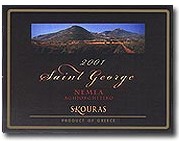
Skouras Agiorghitiko
I'm a Greek by every means, but maybe without a say in the sure-free doxy of things. Some have stared conspicuously at me with a fixed gaze, especially when digressive explanations about my Irish first name come into play. I don't mind it so much, but most people seem impressed about how I've handled this lifelong imbroglio of mine. Granted, language is the premiere sign of any culture, and yet, I am soon indebted to learn my own ethnic lexicon. So far, I can only recall sparse proverbs and maxims that are somewhat useful. If things weren't bad enough, I often say in some imprecise representation of self-parody: "Eimai Xelona!" Which may sound like a Peloponnesian battle cry, but in a cruel reality, it means, "I'm a Turtle." Now, I can guarantee this is not so, but it gives you an idea as to the outright shame I've encountered. However, I like to amuse my own mentality by talking about the stuff that makes perfect sense. "Tiropita Alonissos" anyone ? Maybe you would like a couple of "Keftedes," or some "Hirino me Kythonia?" I would think so, because I've made this symbolic Grecian fare many-a-time, and I can spin-out any one of these common specialties very easily. I've got the best "Gigandes" around, so if you have some drinkable Retsina at hand, I'm extending to you a sheer welcome on the part of my ancestries. Still, the culinary and linguistic expositions that I have, or will undertake, would not be complete without the proper libations; some of which, involve formidable winemaking that's more than "quaffable" for any of my family members.
Athiri, Robola, Agiorghitiko and Moschofilero...sorry to begin things this way, but your tongue is going to whirl in rhapsody a couple more times before you understand Greek wine. It is by reason, one of the most misinterpreted disciplines in European viticulture and continues to leave us with an outer-dimensional, yet feeble curiosity that you would only find in old astronomical texts. That's fine, but give-in to its mysterious grace for once, and discover that there's more to our craft than just simple mispronunciation. Again, I stress about the casual things in life and I promote moderation as the key point in everything; but as any psychologist will tell you, their job becomes more complex when we sew the intricacies of human understanding. So if anything, the need to follow my advice is somewhat applicable. I know the grapes very well, but I can tell you, there's nothing too intricate about these long-lived cultivars.
Take "Athiri" for example; a dry, crisp white that can actually pair well with lamb dishes. Maybe not a "kid lamb" but something of a full-grown, sinewy, but mature cut of anatomy that's been pole-roasted by humans with sore shoulders and tired, smoke-filled eyes. It's a lot of work for the food, but the wine shows remarkable restraint in terms of fruit and alcohol. Pithy lemon and gorgeous indications of terrain make these whites suitable for hot summer days where the meat is served hot and the mezedes are at imperatively lower temperatures. “Robola” is another focal point, insofar as the peachiness and smoky qualities will abide. It shows a remarkably dry palate, but with a fruitier edge than its more loamy brethren. In some of the lightly praised indigenous pork dishes, it’s more than anyone can ask for. “Moschofilero” is one that is not entrenched in normalcy though, considering the appeal of its aromatics alone. Given the white’s adaptability in becoming a food wine, or a distinct aperitif, it’s abundantly clear that it has perfumed, almost spicy characteristics that show favorably well before, or, after your aunt Tula’s orange cake. One thing I didn’t mention though, was the infamous “Retsina” which, if you gather, has a piney, citric disposition that’s tantamount to a good meatball. It’s the quintessential Taverna-side house wine that has probably bred the most unconsciousness about Greek viticulture. Sometimes sold in unforgiving quantities, it’s a nominal ingredient for sauteed paddlefish. Resinous maybe, cheap ? Yes...but if you need it, the stuff is indispensable.   
Boutari Moschofilero
The reds are not limited to Merlot, Cabernet and now, even Pinot Noir, but the one varietal that has earned a more stable relationship with your common epicurean is, “Agiorghitiko.” Which, if interest beckons, you have a gorgeous, equilibrium of weight that leans on a pretense of blackberries and spheroids of mixed red fruit. Some critics could sagaciously remark on its light, easygoing profile, but even on the lesser end, it’s an underdressed cameo for proteins that are strictly bone-in and braised beyond expertise. I wouldn’t go praising something like “Mavrodaphne” too soon if you have some Arni Souvlaki on spit, but if you’re looking to spend some downtime on the curtails of this sweeter, more lascivious variety, be prepared for candied fruit and chocoholic clairvoyance. 
I wouldn’t deter anyone from some of the garnet-robed specialties, but the impasse I experienced when learning of the market’s heavy concentration on whites, was something of a surprise. There are more grapes of either hue, or brilliance to discover; however, despite color, taste, or any concepts involving its availability, the enjoyment of Greek wines are somewhat deadlocked. The comforts of this mediterranean craft do not appear viable enough for consumers and notarizing gurus to offer up any realistic dialogical stimuli whatsoever. My thoughts retract and retrace between my own understanding of a foreign language and the people who should be using words to translate  something that’s been mysteriously vinous, but always exceptional. 
Seems like we’ve all been lax in the Alpha and Omega of things.

Brian Maniotis
Westchester Wine Warehouse Team

Visit us @: westchesterwine.com

Tuesday, July 26, 2011

Implacable Sangria

Mathilde Cassis
Any dullard can make a drink…can certain monotonies create a “mock-tail?” Do
you see what I mean here? If you don’t, then consider how our cache for
everything labeled “Tini” has been operating as a benign and unruly suffix.
There’s something unfortunate about that, but equally unnerving, is the
complacency to which Sangria can be subjected; which, more or less, is an
indicator that our instinct for epiphanies are nothing but make-believe
excursions to a cooler, more tropical hideaway. I have been consistently
fearful that most people know what this ancient hodgepodge usually is, but
do not focus their thoughts beyond the Jeopardy episodes where it pops-up
twice per annum. Maybe this is me foreshadowing, but you should save your
guessing strategies for the “Daily Doubles” and conclude your risk-taking
with answering the simple questions; or else, a bowing-out strategy, rather
than winning, is all that‘s foreseeable. Funny how these things relate to
wine and spirits…but if you want me to expand, the truth behind the world’s
most misunderstood cocktail, is a lesson in thoughtful simplicity and not
some run-with-gun venture into a more wild and vivid spectacle.

Yes, heed what I say...it's no more than a routine cocktail. That’s
the second trivial iota that no one seems to get. That in fact, the
red-blooded, high maintenance, metro-sexual libation is, in the total sum things,
a historic mixer. The theories as to the chronological pretext of the drink is usually
uninteresting and mostly unfounded, but there’s some odd beliefs as to its
conception; usually, attempts to unearth the cornerstones of its legacy, have
only created further bastardizations. Those who crack wise, may tell you
with a hearty, guttural New York accent that its formative years found solace
in Flushing, Queens; where at the 1964-65 World’s Fair, it was ready to become
a standard fixture that would eventually replace “Pico de Gallo” as
the most iconic, yet conveniently misunderstood ethnic specialty. Others will tell you
that "Mulled Wine, Glug, Glogg, Gluwein, Kalimotxo, Rioja Libre and Black
Vulture" are all variants of Sangria in some way, and that all cultures,
first or foremost, have partook in the logical cause of introducing wine to
a pantry of workable extras. This has been going on for eons perhaps,
since everything seems to have been made by accident anyway; including
perchance, our discovery of fermentation. Dry spices, fresh fruit, and
other types of alcohol are certainly the most agreeable products
involved in any sort of culinary amalgamation, so if anything, one
could say that we share a sanguine trait with a drink that literally
translates to: "bleeding," or "bloody." At the least, it's what I've
been encouraged to understand.

Ok, you know me by now, since I’ve preached well beyond my boundarie
about the practical usages of liqueurs and spirits. Withstanding the
criticisms, I'm going to tell you that Triple-Sec isn't needed, and
the utilization of flavored Brandies, are in simile, like an
unremorseful middlemen handling the business end of Sangria's fruit
trade. Also, there's no reason to go plucking for peaches, apricots, strawberries, blues,
reds and other inglorious halves and quarters that will develop into nothing but an
inebriating soup for the parched.
Pama Pomegranate

There's a reason why people talk so much about apples and
oranges, because they are the only plausible things that will fortify
the contents of a glass pitcher. Step one, find a reasonable bottle of
Pinot Noir and use its medium-bodied nature to let all the necessary
infusions commit to a great drink...use a Sauvignon Blanc if you're
pining for the Blanco version. Two, purchase some blood-oranges,
"fuji, granny smith," or "honeycrisp" apples and proceed with a little
more confidence than before. I stress the importance of adding the
fruits the night before and following through the next afternoon with
a few delicate sundries. You may think I've wasted my time with
minimalistic gestures for saying this, but some lightly pressed green
cardamom pods can really upend the scowl of your local
gormandize...add them to the base of well-oriented  punch. You can add
some liqueur to taste; usually, "Mathilde framboise, creme de cassis,"
or "Pama's pomegranate cordial" are sufficient, but do not go
overboard. If sweetness is an issue, add honey, and for whoever's
sake, don't use refined sugars, or you'll have the same downtrodden
look that you wore when discovering that plain iced tea did not
deserve two of those little white packets.

Speaking of sugar, save your mason jars for that, and don't keep your
sangria lying around like some brooding specimen. I doubt anyone,
including yourself, would want to see a blend of pears, peaches,
raspberries, lime soda, champagne and orange concentrate floating
around like random anatomies soaking in formalin. Sangria is best at
its freshest, so don't even bother with unconsciously satirizing
everyone's mistakes. Again, I plead with whatever sense of scrutiny
that even if you're making mulled wine, there's few things you need to
accomplish the feat. A heavy pot, some cinnamon, apples, cloves honey
and a hearty Claret is a great winter icebreaker. Honestly, don't make
things awkward by inviting 'Auntie Schnapps' for who you very well
know, has a soulful and timeless banter that becomes more peppered
every year.

Relatives or not, objects and wine make party favors, but not favorable parties.

-Brian Maniotis

Westchester Wine Warehouse Team

Visit us online @: westchesterwine.com

Monday, July 18, 2011

New-World-Old-World and Other Contractions

Di Giulio Cab
I'm the poetic type...so what ? Regardless, I often abridge even myself even in the continuity of all things communicative. Do you see?  I'm just as eagerly doing it now. Maybe I am somewhat lovelorn in the presence of good verse these days, but if all literary outlets become loathsome in the end, I guess I'll keep reading something else. It's a keen bet that modern poetry is incapable of creating systemic revolutions, but when authors still romanticize about "How to Light a Cigarette" or, build their stanzas through email subject lines, my prefrontal cortex erupts with brain lava; from then-on, I generate something a bit more unsettling through my own choice of words. Really, I begin to wonder if there's enough clout to this idea of "Modernism" when it refers to anything of human construct. Some say, this timely aesthetic is nothing but an unorganized mapping of the last hundred years of human development...I'm given to wonder about that. The better word might be "Contemporary" because it relates to the immediate present. Granted, I have an awful lot of sentiment to recall when mentioning something antiquated, or historically obscure, but compare something artful then, with something of the same ilk today. Do you see a big difference? Maybe this is why most people shuffle their thoughts from inbox-to-outbox when I dribble about popular winemaking versus the unfashionable, geriatric kind. In that respect, not even the glowing consciousness of our youth, seems to have enough curiosity to fully understand the old-world methods and tribulations needed to create something genuine. Which is why, if I could traverse through time and space, the one invention that I could have long-since obliterated, would have been the "Easy-Bake Oven." Not because it's iconic, but for the argument that it may have promoted the dynamism behind American laziness and insatiability. Fortunately,  good wine is never a bastion for remorseful treats; insofar, that you have actually done some of your homework. Still, the "Good Ol' Stuff" that competes with the brand-new, impulsively bought, but we don't know why kinda stuff,” appears stalemated in the battle of values. Vintners seem to know what they're doing on either side, but is there a better choice between one or the other ? When in doubt, do we just digress and purchase either bottle? The end of countless queries about being choosy, rests on the definitions that describe what "New-World" and "Old-World" means in terms of overall flavor, profile, nuance and our final impressions.

Most will wince when I say, "This is old-world winemaking," because it's an eidetic run of the mind that recalls a butchery of bad images. Realistically, consumers see these products as bloody, gamy and sinewy; having if possible, a considerable  presence of earthiness, tannins and acidity. In fact, some people scowl when I mention "New-World" wine because they've familiarized themselves with a product that unleashes more fruit than a produce lab. I won't account for this ideal as being true or false, but what I could often conclude, is that there's a stark form of opposites to winemaking methods from past to present. Some feel that the olden style of winemaking, shows a little more finesse of fruit, and can generally have more earthen aspects. They have a immutable sense of terroir, given the fact that overseas vineyards have existed for quite some time. Coveted soils and centenarian rootstocks act as the elemental viaducts that most upstart wine regions haven‘t been privileged to. That is of course, not always the defining factor, but some of the vines range from a couple years in age, to something that mocks a traditional human lifespan; usually, 40-to-120  is considered “acceptable” for those "older vines." Basically, aged roots enhance tactile experiences with minerals, a more focused presence of fruit and just about everything else that a good vintner will diligently impress upon you; yes, earthiness and tannin do make way. Too true, but people seem to clamor over a wide variety of wines from the nouveau monde, being that they show an intensity and purity of fruit significantly different than what much older appellations have. In America, we're a bit more patriotic towards creating something phenolic; maybe that's just the theme of western methodology, but even on the reverse, we tend to revel in the pursuit of science, commerce and the embodiment of ripeness. With alot of merit, wine-tech has a fortunate way of delivering to us, approachable, reasonably-priced reds and whites; saying the most, these have a bull’s-eye penchant for steak-a-thons and lobster-socials.       

Let's see...If I could describe any situation where this "supposed" intensity of fruit occurred, it would be with a Cabermet that is a bit pricey, but always a good nominate for the delicious idolatry of post-European
Z-T Pic ST. Loup
winemaking. Marco Di Giulio has a interesting proprietary Cab that outshines some of the high-yield, well-marketed reds that have loomed over the Cali wine trade since...forever. It is by every means, multi-dimensional, but the draw lies not in tannin, but a girth of fruit, burnt cedar, cured meat and one of the most profound underpinnings of glycerin; a.k.a, sugar and alcohol. From its $77 dollar tag, you can taste the generosity of which, only the United States could be capable. In counterpoint, you could very well say, that the Coteaux Du Languedoc has all we want in a humble, more price-friendly style that eschews the conventional rusticity; maybe, something like a Montepuliciano from Abrruzzi. I wouldn't go that far to remark upon their similarities, because there are not too many…I'm just emphasizing a point. I like the Domaine Zumbaum-Tomasi as my Pic St. Loup, due to its assertive, but not ever-present tannins and the equality of darker, but also, more carmine-colored fruits. Woodland herbs and some traces of nut oils are by some stretch, a realization of forgotten, or at least reassuring notions of nuance from eras past. An Andrew Jackson and three Washingtons’ or so, will get you there. In lieu, my time and my pelf are at least, gateways for reasonable, provocative wine.    

To be honest, it's not the money, or some altercation between steaks and sizzles, but there are if anything, much more choices now. The nature of winemaking seems not ruled by classic distinctions all the time, but also newly appointed practices that are somewhat redefined by human evolution and the suitable technologies. I will not say if the newborns, or the olds are either of my favorites, because there are no reasonable milestones to mark any one of them as "better." I tend to think about this at the risk of being overwhelmed, but the truth behind the game, is to find out who is doing what, why it's interesting and whose tastes are victim to certain coercions.

I don't know why, but our palate has been talking about us for some time.

-Brian K. Maniotis
 
Westchester Wine Warehouse Team

Visit us online @: westchesterwine.com
Sunday, July 10, 2011

Cocktails For The Lovéd

Absolut Açai Berry
You’re a nominal party-going individual aren’t you ? If not, would it be wrong to call someone a warrior because they spend the weekends tempestuously flicking tiny parasols  out of their glass? Nope, because we work by tremendous pace all week and the one thing that separates us from the uncertainties of barstool infrastructure, are good household elixirs. Now, before I bilge upon any specifics, I have a interesting real-world case study on one particular individual whose luck, that is to say, was of lesser  abundance if you could take his trustworthy nature into account. To keep it simple, “Bobnick,” as I have decidedly called him, was somewhere between six or seven years of age and had virtually no understanding of the horrid amalgamations of which blender is capable. Cycling back through my memories, I recall a cruel porridge of bananas, pop-rocks, club soda, dried onion, Tabasco, A1, P, B, J,  Ka-Boom Cereal marshmallows and various sprinklings of pork products both cooked, or uncooked. Without question to the taste, color, or sincere lack of artistry, the palate-profile of this mixture has been left strictly unrecorded. Bobnick, whose blue-eyed, unfrowning countenance---of well-bridged, rosy cheekbones---lovingly lifted this sordid punch promptly to his mouth with two hands and gulped it back with an expression shrouded by a wide glass pitcher. In the meantime, his brother and teenage counterpart laughingly exchanged several exclamations. However, this gaggle of untimely hazing rites and boyish hollering could not drown the devilish hurls and spits that ensued as poor Bobnick roared with a brand of anger and sickness unbecoming to an adolescent. The foul drink was promptly named “Crud” which stigmatized the poor boy even further; because now, this title adhered to Bobnick who, like all of us, are constituted by what we ingest. Therefore, he was no longer treated to his own namesake, but always referred to as the one thing he probably loathed the most.  

Somewhere, at some point, I heard he became a successful bartender. That is not to say by contrast, we
Absolut Mango
should beware of all persons with a knack for concoctions, but you should really question anyone who acts as a dispensary agent. I would say it is mandatory once in awhile, to realize the potential of cocktails from loved-ones; yes, a drink with a hearth-driven quality that you can ensure has no bouillon, or the flotillas of bacon therein. In production, I don’t necessarily recommend a brother, sister, or an optimistically comical uncle, but maybe your spouse will do just fine. I speak from experience, but I am not offering marital advice. Honestly, this is not some half-serious attempt at rekindling the firebrand nature of couples rejoicing through their unsobering nightlife. This is by far, the chance to release oneself from the burden of soapy, earthy, diluted, or otherwise boring mixers.

The one love that I would stake all my afterlives upon, is actually a damn-fine mixologist. She, unlike a post-grad tender of drinks, has an impassioned view of a discipline that’s never outshined by extracurricular drinking. One of her homemade pleasantries are something of a hazy azure, mottled by shades of lavender and several pinks. I’m only referring to what I have so aptly called a “Huckleberry Hatskein” which, if you’ve thought it out carefully, is like wearing a make-believe chapeau dotted with blueberries. Of course, I see no difference between the two bluish fruits, you must understand now what I‘ve done here. The process is simple: Combine one pint of blueberries, a proportioned volume of lemonade and any reasonable parts of  Absolut Mango Vodka. Secondly, transfer to a food processor, or blender, then purée the mixture and strain twice through a metal sieve, emptying the final contents into a glass pitcher. Let it stand  refrigerated for twenty-to-thirty minutes and if desired, add more lemonade if mixture is too strong. Serve over ice and watch tacos entrenched in Piscean marvels and jalapeno slaws course through the gastronomical byways. I realize that the effect of a mango may have lost some application; but if you’re miffed about it, there’s always a fresher fruit around, so start picking elsewhere.

You could always use Açai berry vodka from Absolut  as well, which could host a tart, but juicier exposition than common fruits d’azur, but that’s an idea I’ll leave to an open forum; more notably, this lonely blogsite. What I would recommend, is not being a slapdash chemist in the middle of an unimaginative summer. There’s a whole lot of booze to experiment with, so much in fact, that you couldn’t possibly recreate the same whimsies and joys by tampering with white wine. Or, like ascribing from what the martyr “Bobnick” has told us, have someone you really, truly, amiably love so much, to make refreshments that won’t leave you with painful recollections, or the burden of a passing ruse.    

My fiancé is always thinking of me...she starts by pouring heartfelt thoughts into every glass.

-Brian K. Maniotis
 
Westchester Wine Warehouse Team

Visit us online @: westchesterwine.com  

Sunday, July 3, 2011

Campaign For Cannonau

Picco Del Sole
It’s a health thing right ? Regimenting, dieting, whatever the accursed terms may imply, there’s more than a fair percentage of people who treat wine as supplementary; but really, this kind of consumable is mandated for dining of course, but  I often gnash my teeth with a sort of angry smile when thinking about all the wrong reasons we “toast” to someone’s betterment. Does it actually pertain to longevity? Some would say yes, but  beyond the rude averages of alcohol percentage, is there room for something beneficial? I tend to owe a great deal of satire to many people whose ‘wining introspections’ are creating a thinning effect on their mind, body and soul. Wallet stuffings aren’t as generously refilled anymore as they used to be, so there’s a deeper problem with that too. But the fiduciary interests of the filled glass and the casually-minded sipping experts are not part of my chief concerns. More or less, what I do want to know, from being unduly skeptical, is whether or not this unaccredited ‘Wine-Your-Way Healthy” program is actually working for many Americans. More than ever, I quietly wonder if this is another pseudo-dietary health obsession, or an unorthodox, unconsciously optimistic flash-pan dynasty for serious drinkers. I’ll leave our dealings with Sgt. Swagger and Gen. Tipsy up to the U.S. government, but domestic consumers must understand the modesty and the advice required to fully experience what Sardinians have enjoyed for centuries.

I couldn’t be more emphatic in my use of “century” when Cannonau is on the table. Thanks to the grape and its payload of resveratrol, there’s ¾quite literally¾a heartfelt suggestion that many locals from Sardegna have been hiding a mysterious wine font; one mainly, that prevents human beings from experiencing the effects of aging. Civilians who hail from the island are not necessarily druidical in their secrecies, but some of them tend to live until their centenary years…amazing. Is it a particularly clandestine winemaking skill ?  Maybe so, considering they’re dealing with a varietal that has nothing but good promise for cardiovascular health and the pulmonary system. Despite their wine health, I think the lighter, feathersome quality to some of their applicable foodstuffs also illustrates a  lifestyle that most of us should observe. Hey look ! more fish, more phenols, and etcetera… it’s probably a good start, that is, once we eliminate the “parmigiano” and “panini” factor from the overall practice of domestic gluttony. Yes my friend, wine is in the glass, but the meat is on skewers, and the pasta ? It comes and goes depending on the  condimenti. So in lieu, there’s nothing too special to remark about this lone grape right?

I do not think so, because even as science can be hypothetical at times, there’s obviously something about Cannonau that goes beyond Bottarga and Fava Beans. With a history routed somewhere between Spain and its Garnacha vines, an exact DNA match-up is still hotly debated. Sounds fun more or less, because militant occupation of Sardinia was not altogether dismissed by the Spanish crown during the 15th century; seriously, do you really think they were about to showcase Tempranillo? Regardless, I have an intolerable interest for conquests of yore, past imperialisms and fruity reds…I think see a correlation forming here. Yes! show me a vintage that boasts of sparring fruits, but does not appear sappy in front of the commanding office of one’s
Argiolas Blend
palate. You could offer me a bold Grenache, but all I want is something to compliment a well-prepared, but crudely dressed stew of legumes and sausage. An accord between Cannelleni bean soup and the “2008 Picco Del Sole” would justify the red’s lean, fruit-tempered profile; ideally so, because I can’t imagine a “Super Tuscan” being the end-all choice for complimenting your starches.“Argiolas Costera” has a similar point of interest, with a five-percent splash of “Carignano” and “Bovale Sardo” to round-out an otherwise imposing, full-bodied remainder of Cannonau. For this, I have to hop completely off the bean wagon, but I would advise hungry buyers to pull off a “Manzo Alla Pizzaiola” in their kitchen. Trust me, it’s not some atypical high-wire trick for circus folk, but it’s a damn fine entrée for the culinary-minded.

My only gripe is, the lack of finding an organic and equally biodynamic vineyard that will strengthen the appeal of this wonderful cultivar. I have heard good things about Tannat, Cabernet and many other grapes which would contribute to our well-being, but I have to wonder why this island varietal is by far, the strongest medicine in the minds of oenologists everywhere. Unlike the study of astronomy, enological science is not based in assumption, but actually provides evidence that could answer an age-old conflict: “Can wine actually be good for you?” Yes, but in remembrance of the ancient Greco-Roman proverb: “Everything in moderation,” one could follow a more righteous aesthetic. Still, I continue to search for niceties that are exotic and indigenous, but as it is in most ethnic climates, at best, two glasses with dinner are all you need tonight.  

I’m not a medical practitioner, but I feel confident in my prescriptions.

-Brian K. Maniotis
 
Westchester Wine Warehouse Team

Visit us online @: westchesterwine.com